


Air War Malta - June 1940 To November 1942
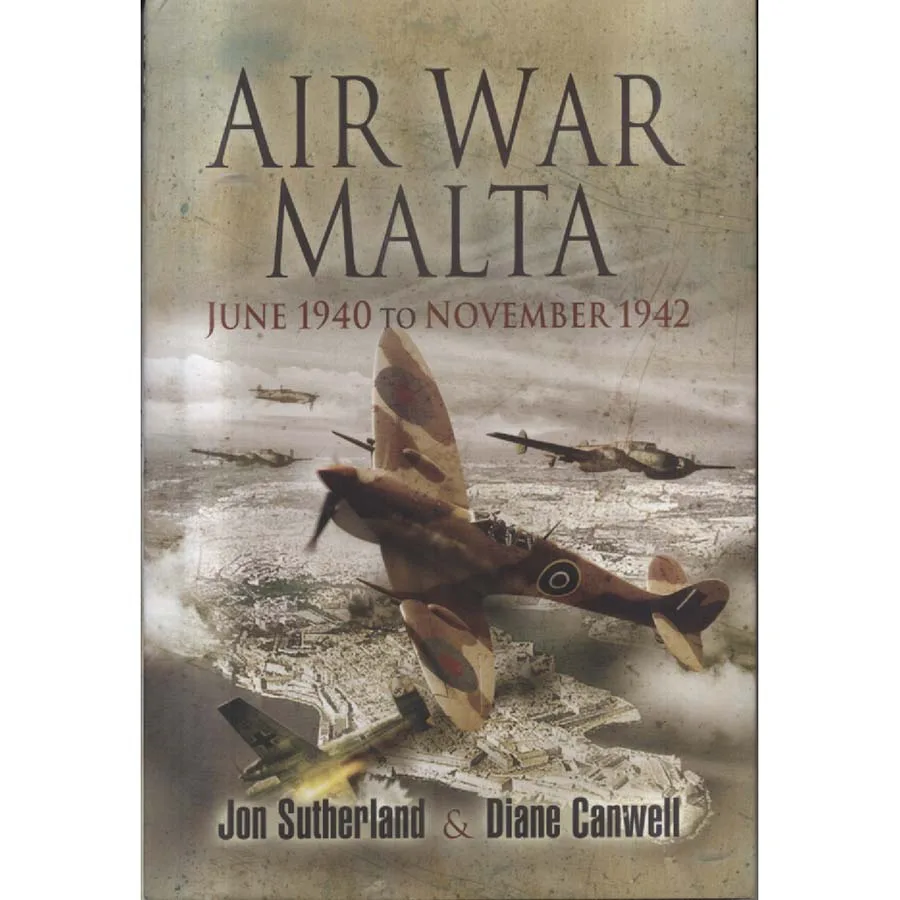
Publisher: Pen and Sword
Format: Hardback
ISBN: 9781844157402
Air War Malta: June 1940 to November 1942 tells the story of one of the most fiercely contested air campaigns of the Second World War, fought above a small Mediterranean island which geography had placed in exactly the wrong location for a quiet life and exactly the right one for interfering with Axis supply lines.
When Italy entered the war in June 1940, Malta stood between Gibraltar and Alexandria and within striking distance of the shipping routes supplying Axis forces in North Africa. It was therefore strategically priceless, unavoidably conspicuous and defended by resources which suggested that someone in Whitehall had expected the enemy to overlook it out of courtesy.
The island initially possessed thirty-four heavy anti-aircraft guns, eight light guns, a single radar set and a handful of obsolete Gloster Gladiator biplanes. The most famous of these became known as Faith, Hope and Charity, three qualities which are admirable in a civilian population but generally regarded as insufficient specifications for an integrated air-defence system. Nevertheless, the Gladiators took to the air against Italian bombers and fighters, beginning a resistance that would continue for more than two punishing years.
Jon Sutherland and Diane Canwell follow the campaign as Hurricanes and later Spitfires reinforced the island, often delivered by aircraft carriers and flown across the sea with little margin for error. Pilots arrived to find exhausted squadrons, cratered airfields, limited fuel and maintenance crews keeping aircraft operational through ingenuity, cannibalised components and an increasingly theoretical distinction between spare parts and wreckage.
The Regia Aeronautica and Luftwaffe subjected Malta to repeated and often overwhelming attacks. Airfields, docks, towns and supply installations were bombed relentlessly, while civilians sheltered underground and watched their homes disappear one street at a time. Valletta and the Grand Harbour became particular targets, since the Axis had correctly identified them as important and responded with the traditional military method of dropping large quantities of explosives until they appeared less so.
Yet Malta was not simply defending itself. British aircraft, submarines and surface forces based on the island attacked Axis convoys carrying men, fuel and equipment to North Africa. Every ship sunk or turned back weakened Rommel’s armies, which made neutralising Malta an urgent Axis priority. The island was therefore bombed because it was dangerous, and remained dangerous because being bombed had not persuaded it to stop.
The authors describe the successive phases of the struggle: the early Italian raids, the arrival of German units, the battles for air superiority, the desperate supply convoys and the increasing effectiveness of Malta’s defences. They examine the aircraft, pilots, commanders and ground crews involved, while also recognising the endurance of the Maltese population, collectively awarded the George Cross in 1942 for courage under conditions that made ordinary civilian administration something of an extreme sport.
By the summer of 1942, Malta was close to starvation and desperately short of aviation fuel, ammunition and almost everything else. Convoys attempting to reach the island suffered appalling losses, but sufficient supplies eventually arrived to keep it functioning. Reinforced Spitfire squadrons began to reverse the balance in the air, and by November 1942 the Axis assault had failed. Malta had not merely survived; it had helped strangle the supply routes upon which Axis operations in North Africa depended.
Illustrated and thoroughly researched, Air War Malta is a detailed account of combat in the skies, endurance on the ground and the logistical battle that connected them. It demonstrates that air power depends not only on glamorous machines and celebrated aces but on radar operators, armourers, mechanics, convoy crews and people prepared to repair a runway while somebody continues trying to bomb it.
This 2008 Pen and Sword edition is in Very Good condition. It is an ex-library copy, so it may carry the customary institutional markings, but it has been very well looked after—apparently issued to readers more careful than the Luftwaffe. A substantial addition for anyone interested in RAF history, Mediterranean operations, the siege of Malta or the remarkable military potential of a small island that declined to sink, surrender or move somewhere less strategically inconvenient.
Keep browsing: See more War books Other books by Jon Sutherland and Diane Canwell
